Open and modular
Open-source SDKs, ROS compatibility, and modular add-ons such as LiDAR, depth cameras, and servo arms let students extend the platform instead of hitting a wall.

Open-platform humanoids and quadrupeds, a structured curriculum, and ongoing support — so schools, colleges, and research labs can teach coding, AI, and perception on the same hardware the industry deploys.
Robotics education works best when students program real machines. We pair open, modular robots with lesson plans and instructor training, so a program can start in a single classroom and grow into a full research lab.
Open-source SDKs, ROS compatibility, and modular add-ons such as LiDAR, depth cameras, and servo arms let students extend the platform instead of hitting a wall.
Onboard NVIDIA Orin compute scales from introductory robotics and LiDAR projects to advanced spatial perception and on-device AI.
Structured course modules, instructor onboarding, and RobotX engineers on call so educators are never left to figure out the hardware alone.
 Education
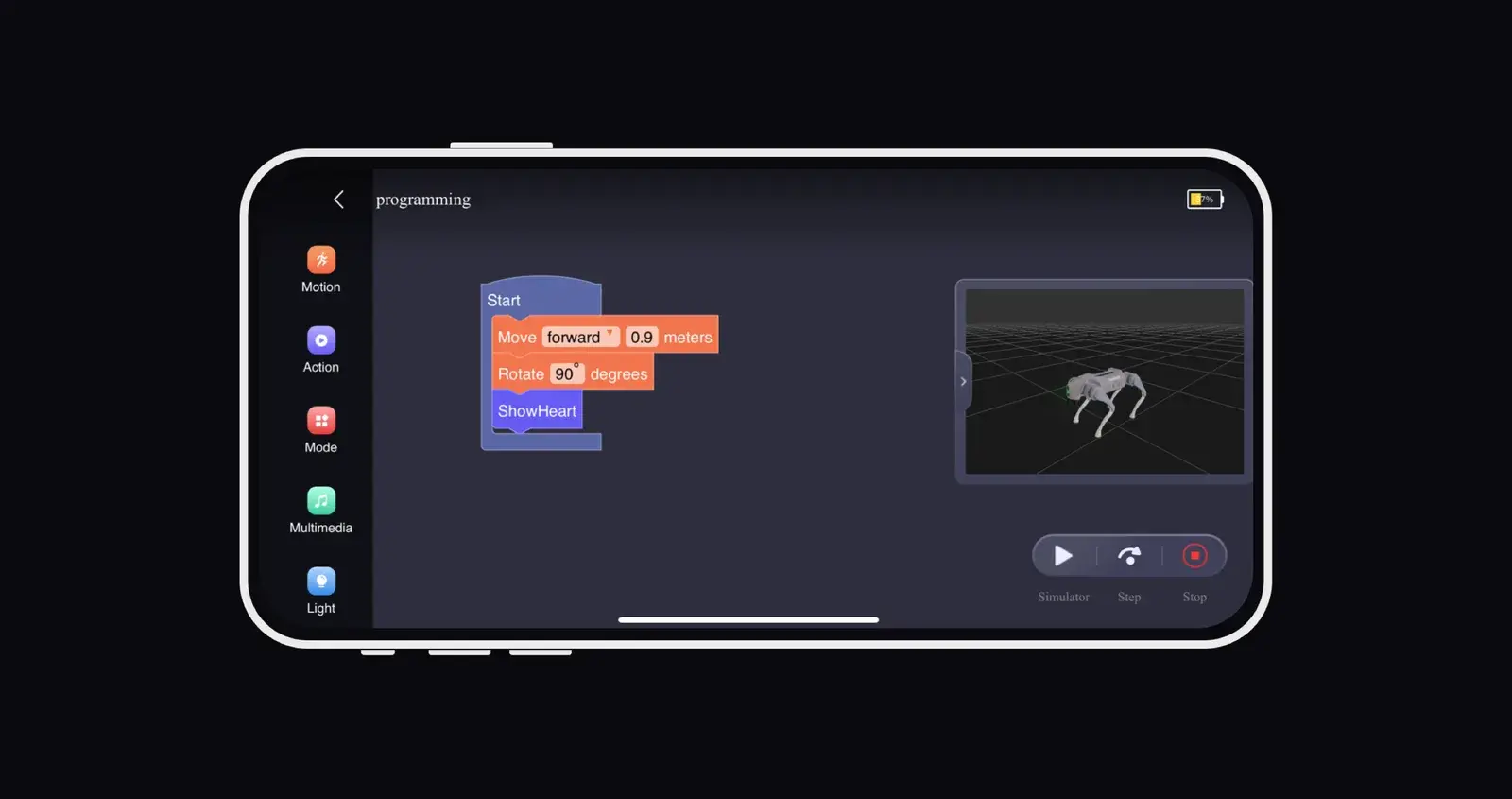
Students move from block-based programming to Python and C++ on the same robot, then into ROS to build perception, planning, and control nodes that run on real hardware.
Onboard cameras, depth sensors, and optional LiDAR give students live data for object detection, mapping, and navigation projects — the same problems robotics teams solve in the field.
Quadrupeds suit introductory programs and mobile-robotics coursework; humanoids open up locomotion, manipulation, and embodied-AI research. Both share tooling, so a department can grow without retraining.
We help plan the lab, train instructors, supply course materials, and support the hardware through its life — from first unboxing to capstone projects and competitions.
Every environment has its own constraints. We'll walk through your operation and scope a platform that fits.